
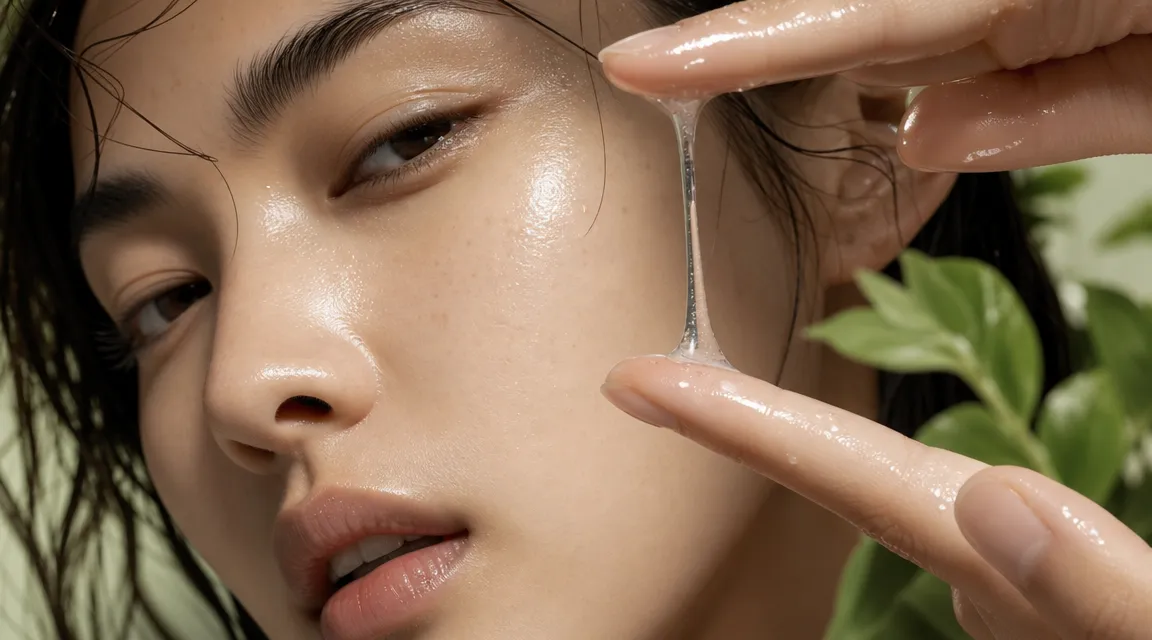
Snail mucin skincare — the ingredient with the most polarizing name in beauty — is neither the collagen-boosting, scar-erasing wonder its fans claim, nor the useless gimmick its critics suggest. Snail mucin (Helix Aspersa Müller Glycoconjugates, or HAMG) is a secretion collected from common garden snails that contains a measurable mix of glycoproteins, hyaluronic acid, allantoin, and various peptides. Clinical research supports its role in hydration and barrier repair. The collagen synthesis and scar-fading claims are more complicated — and that is exactly what this guide unpacks, ingredient by ingredient and study by study.
How snail mucin actually works
Snail mucin is not a single compound. HAMG is a complex biological matrix — a mixture of molecules the snail secretes to protect and repair its own tissue during movement across rough surfaces. When you apply it to skin, you are essentially applying a pre-formulated cocktail of known skincare actives that happen to occur together in nature. This is both its appeal and the source of most of the confusion surrounding it.
The key components and what research shows each one does:
- Hyaluronic acid — a glycosaminoglycan that draws water into the skin’s outer layers. This is the mechanism behind the hydration that most users notice within the first week of use. It is the same compound found in standalone hyaluronic acid serums.
- Allantoin — a urea derivative that softens the skin and supports cell turnover. It is also present in comfrey root extract and has a well-documented profile as a soothing, keratolytic agent. Allantoin is the component most associated with snail mucin’s calming reputation.
- Glycoproteins — proteins bound to carbohydrate chains that may support the extracellular matrix of the skin. Research into these is ongoing; the specific mechanisms by which HAMG glycoproteins interact with skin cells are not yet fully characterized.
- Peptides — short amino acid chains that may signal fibroblast activity. The specific peptide profile varies significantly by snail species, diet, and collection method, which makes standardization a genuine challenge in the consumer market.
- Glycolic acid — a low-concentration alpha-hydroxy acid (AHA) naturally present in the secretion. The concentration is typically too low to produce significant exfoliation in finished consumer products, but it may contribute to the ingredient’s texture-refining reputation over time.
The honest framing: when you debate whether snail mucin works, you are partly debating whether hyaluronic acid works (yes, consistently), whether allantoin works (yes, well-documented), and whether the HAMG matrix as a whole has effects beyond those individual components. That third question is where the science becomes significantly murkier, and where marketing has been most aggressive in filling the gap.
What the research actually shows
Clinical research on HAMG is limited but not absent. A placebo-controlled study found that a snail mucin-containing cream produced measurable improvements in the appearance of fine lines compared to a control formulation over a 12-week period. Separately, dermatologists have noted that HAMG shows documented potential in supporting wound recovery in clinical contexts — though the concentrations used therapeutically tend to exceed those in standard consumer serums.
Snail mucin at concentrations of 90% or above has demonstrated measurable improvements in skin hydration and texture in short-term trials. These improvements are largely consistent with what the hyaluronic acid and allantoin content alone would predict, which raises a fair question: is HAMG doing more than the sum of its parts, or is it simply an elegant delivery vehicle for compounds we already understand?
The scar and collagen claims are more nuanced. Some dermatological research discusses HAMG’s potential in post-procedure recovery, particularly after superficial procedures like microneedling. However, this does not translate straightforwardly to consumer products fading established acne scars. There is a meaningful clinical difference between supporting acute wound healing and reversing post-inflammatory hyperpigmentation that has been present for months — marketing frequently collapses that distinction.
HAMG shows measurable collagen-stimulating activity in cell culture studies, but in-vitro results do not reliably predict performance on intact human skin at consumer product concentrations.
The evidence for snail mucin is real but narrower than the marketing suggests: solid on hydration and barrier support, tentative on collagen synthesis, thin on established scar fading.
What snail mucin is good for
If you want evidence-grounded use cases, here is where snail mucin is a reasonable and defensible choice:
- Hydration maintenance: The hyaluronic acid component makes it an effective humectant for daily use. Users with dry or dehydrated skin tend to notice the most consistent, predictable benefit. If you are already using hyaluronic acid in your routine and finding it sufficient, snail mucin may not add dramatically more.
- Post-active recovery: After using retinoids, chemical exfoliants, or other potentially irritating treatments, snail mucin’s allantoin and glycoprotein content may support the barrier recovery process. Many users report it as a useful buffer ingredient in the evenings after tretinoin application, helping to reduce the dryness and flaking associated with retinoid initiation.
- Early fine line support: The available trial data suggests modest improvement in fine line appearance over 12 weeks of consistent use. Realistic expectations matter here — this is a hydrating, barrier-supporting essence, not a resurfacing agent.
- Sensitive skin soothing: The allantoin content gives snail mucin a calming profile that suits reactive skin types better than many alternatives. It is typically non-irritating at high HAMG concentrations, provided the formulation’s preservative system does not trigger individual sensitivity.
Snail mucin layers well with most actives and does not typically interfere with the efficacy of niacinamide, peptides, or ceramide-based moisturizers. For a closer look at how niacinamide compares on specific concerns like oiliness and pore appearance, it is worth reviewing those two ingredients side by side before deciding which earns a permanent slot in your routine.
What snail mucin won’t do
Being specific about the gaps between marketing language and available evidence is useful here:
- It will not reliably fade established acne scars. Post-inflammatory hyperpigmentation responds more predictably to azelaic acid, niacinamide (vitamin B3), tranexamic acid, and vitamin C. The evidence base for those ingredients on pigmentation is substantially stronger and more directly applicable to consumer product use.
- It will not produce glass skin on its own. The glass skin aesthetic is a finishing effect achieved through layering, consistent routine discipline, and overall skin health over months — not through any single ingredient at any price point.
- It will not replace retinoids for collagen remodeling. Snail mucin’s collagen synthesis claims are primarily based on in-vitro studies using cell cultures. In-vivo evidence — actual trials on human skin — is limited compared to the established body of research supporting vitamin A derivatives for collagen remodeling.
- It will not outperform a well-formulated basic humectant for hydration alone. If your only goal is intense skin hydration, a dedicated hyaluronic acid serum with multiple molecular weights often delivers comparable results at a lower cost. The case for snail mucin rests on its multi-component nature, not superior hydration per dollar.
Snail mucin is a supportive, multi-function essence — not a standalone active. Expecting it to perform the way a prescription retinoid or a professional-grade AHA peel performs will lead to consistent disappointment.
How to use snail mucin in your routine
Snail mucin is most commonly sold as a serum or essence, typically at concentrations ranging from 80% to 100% HAMG. Application is straightforward, but a few details improve results:
- Apply to slightly damp skin after cleansing — this maximizes the humectant draw of the hyaluronic acid content and prevents the product from pulling moisture out of already-dry skin in low-humidity environments.
- Layer snail mucin before heavier creams, balms, and facial oils — as a water-based essence it sits earlier in the routine, with thicker occlusive products sealing it in after.
- Morning and evening use is appropriate — snail mucin contains no photosensitizing actives, so there is no reason to restrict it to the PM routine, though always follow with SPF in the morning.
- Introduce gradually if you have reactive skin — delayed sensitization to snail mucin, while uncommon, is documented. A 48-hour patch test on the inner arm before full-face application is sensible practice, particularly if you have a history of contact allergy.
- Be cautious with sourcing — counterfeit high-volume snail mucin products are a documented issue, particularly with popular formats. Adulterated products may contain unlisted preservatives or heavily diluted HAMG. Purchasing from authorized retailers and verifying lot codes when possible reduces this risk.
On compatibility: snail mucin works well alongside niacinamide, peptides, and hyaluronic acid serums. Exercise some caution layering it in the same step as high-concentration L-ascorbic acid vitamin C — the pH difference between these formulations may affect the stability of both, though this is a formulation concern rather than a skin safety issue. Apply vitamin C separately or use a different vitamin C derivative if layering is a priority.
Common questions
What does snail mucin do for your skin?
Snail mucin (HAMG) is a biological matrix containing hyaluronic acid for hydration, allantoin for soothing and cell turnover support, glycoproteins that support the skin’s extracellular matrix, peptides that may signal fibroblast activity, and trace glycolic acid for gentle texture refinement. It supports hydration, barrier repair, post-active recovery, and sensitive skin soothing rather than acting as a standalone active treatment.
Is snail mucin scientifically proven?
Snail mucin has limited but documented clinical research. Placebo-controlled studies found measurable improvements in fine line appearance over 12 weeks. Research confirms its hydration and barrier-supporting benefits are consistent with its hyaluronic acid and allantoin content. However, scar-fading and collagen-synthesis claims are more complicated — evidence for acute wound healing exists, but the leap to reversing established acne scars is not well-supported at consumer product concentrations.
Can snail mucin cause breakouts?
Snail mucin is typically non-irritating at high HAMG concentrations and is well-tolerated by most skin types including acne-prone skin. However, delayed sensitization while uncommon is documented, so a 48-hour patch test on the inner arm before full-face application is sensible practice if you have a history of contact allergy. Be cautious with sourcing — counterfeit products may contain unlisted preservatives or heavily diluted HAMG.
How does snail mucin compare to hyaluronic acid?
Both snail mucin and hyaluronic acid provide effective hydration through humectant action. A well-formulated hyaluronic acid serum often delivers comparable hydration results at lower cost. Snail mucin’s advantage lies in its multi-component nature — the addition of allantoin for calming, glycoproteins, and peptides make it a more versatile support ingredient. The case for snail mucin rests on this broader functionality, not superior hydration per dollar.