
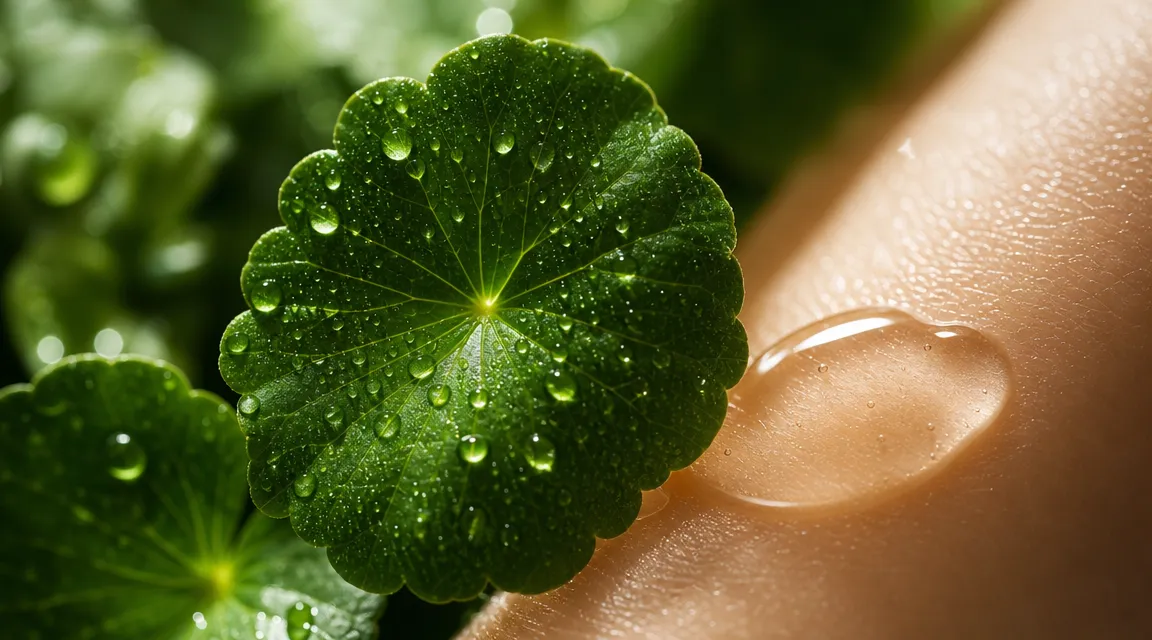
If you’ve followed K-beauty for any length of time, you’ve encountered centella asiatica — the botanical ingredient that launched a thousand “cica” creams. But what is centella asiatica skincare, exactly, and does the ingredient live up to its reputation? We’ve spent years tracking the science behind this South Korean dermatology darling, and the answer is more nuanced than most brand pages will tell you.
Centella asiatica has been used in traditional Asian medicine for centuries, but the modern skincare industry latched onto it for very specific reasons. In this guide, we break down the chemistry, the clinical evidence, and the real-world applications — so you can decide whether a cica product belongs in your routine or not. No inflated claims, no vague wellness language. Just what the ingredient actually does.
What Is Centella Asiatica?
Centella asiatica is a low-growing flowering herb native to wetland environments across Asia, Africa, and parts of Australia. In South Korea, it’s commonly called “cica” — a shorthand drawn from an older taxonomic classification. You’ll also see it listed on ingredient labels as gotu kola, Indian pennywort, or simply Centella asiatica extract. Different names, same plant.
The active compounds that make centella asiatica useful in skincare are its triterpenoid saponins: asiaticoside, madecassoside, asiatic acid, and madecassic acid. These four fractions are what brands and dermatologists actually mean when they talk about the ingredient’s benefits. Understanding this matters because some products market themselves as “cica” while containing only trace amounts of these active fractions. Reading ingredient concentration claims — not just front-label buzzwords — is worth your time.
It’s also worth distinguishing between centella asiatica extract (the whole-plant extract) and isolated fractions like madecassoside or asiaticoside. Some formulations use the full extract; others isolate specific actives for targeted effect. Both approaches can be effective, but the isolated-fraction products tend to offer more predictable dosing and more reliable outcomes in clinical settings.
How Centella Asiatica Actually Works
The triterpenoids in centella asiatica appear to work through several distinct mechanisms. Clinical research shows that asiaticoside and madecassoside can stimulate collagen synthesis in dermal fibroblasts — the skin cells responsible for producing structural proteins. This is not the same as applying topical collagen (which doesn’t penetrate effectively); it’s a biochemical signal that may encourage the skin to produce more of its own collagen from within the dermis.
Centella asiatica also demonstrates meaningful anti-inflammatory activity. Studies have demonstrated that madecassoside in particular can inhibit certain inflammatory signaling pathways, which explains why dermatologists frequently reach for cica-based products when managing post-procedure redness, barrier disruption, or chronic reactive skin conditions. The anti-inflammatory effect works locally at the skin surface rather than systemically, which limits systemic risk while still delivering localized benefit.
There’s also evidence pointing to antioxidant activity within the centella asiatica extract, which may help protect skin cells from environmental oxidative stress. This is a secondary benefit rather than the primary mechanism of action, but it contributes to why the ingredient performs well in morning routines alongside SPF — an area where choosing the right sunscreen also makes a meaningful difference.
Finally, there’s evidence that centella asiatica supports the skin barrier by influencing ceramide production and epidermal differentiation. A functioning skin barrier is foundational to almost every skincare goal — from hydration to sensitivity reduction — which is part of why centella asiatica pairs naturally with other barrier-focused ingredients like niacinamide.
What Centella Asiatica Skincare Is Good For
Centella asiatica has a reasonably solid evidence base for a handful of specific applications. In our testing and review of the clinical literature, the ingredient genuinely earns its reputation in these areas:
- Calming redness and reactive skin. This is the ingredient’s strongest application. Madecassoside has been shown to reduce visible redness and support skin recovery after irritation — consistently, across skin types.
- Supporting post-procedure recovery. Korean dermatologists routinely recommend cica-based products after laser treatments, chemical peels, and microneedling. The ingredient appears to support the skin’s return to baseline more quickly than untreated skin.
- Strengthening a compromised barrier. If your skin feels tight, sensitized, or reactive after using retinoids or acids, centella asiatica may support recovery by improving barrier integrity and reducing transepidermal water loss.
- Mild wound healing support. Traditional use aligns with modern research: the ingredient has a long history in wound care, and clinical studies suggest it may support surface healing in minor skin damage.
- Reducing the appearance of shallow scarring. Some research suggests centella asiatica’s collagen-supporting properties may improve surface texture over time — though this requires consistent, long-term use and realistic expectations.
These effects are incremental and cumulative. They depend heavily on formulation quality and consistent use — not a single application or a one-week trial. We’d suggest committing to at least eight weeks of consistent use before evaluating results.
What Centella Asiatica Won’t Do
Let’s be direct: centella asiatica is not a substitute for proven actives when you need them. If you’re targeting deep hyperpigmentation, you’ll get more reliable results from tranexamic acid, azelaic acid, or vitamin C. If acne is your primary concern, salicylic acid and niacinamide will do the heavy lifting far better than any cica formulation.
If you’re working on visible signs of aging, centella asiatica’s collagen-supporting effects are real but modest compared to what clinical research shows for retinoids. Before you make decisions about your anti-aging stack, our guide to retinol vs retinal vs tretinoin lays out the evidence clearly so you can prioritize accordingly.
Centella asiatica also varies enormously across products. A product labeled “cica” could contain anywhere from a 10% active extract down to a cosmetic trace amount added purely for marketing appeal. Look for products that specifically list madecassoside or asiaticoside as featured actives — not just “centella asiatica extract” buried at the bottom of the INCI list.
One more limitation: this ingredient has no keratolytic activity. It will not exfoliate, unclog pores, or address textural buildup from excess dead skin. If those are your primary concerns, centella asiatica is the wrong tool for the job, and you’d be better served starting with an AHA or BHA.
Who Should Use Centella Asiatica
Centella asiatica is one of the most broadly tolerated actives in skincare. In our assessment, it’s a good fit for:
- Sensitive and reactive skin types looking for a calming ingredient they can use consistently without risk of further irritation
- People using retinoids, acids, or other strong actives who want a complementary recovery and support ingredient in the same routine
- Post-procedure patients recovering from in-clinic treatments who need a gentle, science-backed option
- Anyone with a disrupted skin barrier who wants to rebuild rather than layer more actives on already-stressed skin
- Beginners who want to start with something effective but low-risk while they learn their skin’s responses
People with plant or botanical allergies should patch-test before committing to a full routine — reactions to centella asiatica are uncommon but not impossible. The ingredient is generally considered safe during pregnancy, but as with all skincare decisions in that context, consulting a dermatologist is the responsible approach.
Where to Start With Cica Skincare
If you’re new to centella asiatica skincare, we’d suggest starting with a simple moisturizer or serum that features centella asiatica extract, madecassoside, or asiaticoside as primary actives — not just a marketing flourish on the front label. Korean brands have done the most rigorous product development in this category and tend to use meaningful concentrations backed by internal studies.
Products we’ve assessed that take the ingredient seriously include Purito’s Centella Unscented Serum, Dr. Jart+’s Cicapair range, and COSRX’s Centella Blemish Cream. Each positions centella asiatica differently — as a targeted spot ingredient, a barrier repair moisturizer, or a post-active soothing layer. The right entry point depends on your routine needs and what you’re trying to address.
For those already running a solid baseline routine, adding centella asiatica as a dedicated serum step between your toner and moisturizer typically yields the most consistent results. For people in recovery mode — post-acid, post-procedure, or barrier-disrupted — a high-concentration cica moisturizer worn both morning and evening can be more effective than a lighter serum layer applied once a day.
Centella asiatica also pairs particularly well with hyaluronic acid, since both support hydration and barrier function through different mechanisms. The combination is unlikely to cause irritation and may reinforce each ingredient’s individual effects — making it a dependable pairing for anyone in rebuilding mode.
The Takeaway
Centella asiatica earns its place in serious skincare routines — not because it does everything, but because it does a few things with real scientific backing. Redness reduction, barrier support, and post-procedure recovery are its strongest documented applications. If you’ve been asking “what is centella asiatica skincare?”, the honest answer is this: it’s an anti-inflammatory botanical with meaningful clinical support, especially useful when skin is stressed, sensitized, or in recovery.
It is not a solution for every skin concern, and the cica market is cluttered with products that overstate its role. The ingredient itself is legitimate, broadly tolerated, and versatile enough to work in almost any routine — as long as you’re using a formulation that actually delivers the active fractions at useful concentrations rather than riding the trend on name recognition alone.
Our verdict: centella asiatica is one of the few botanical ingredients in K-beauty where the evidence actually holds up. Use it as a support ingredient, not a hero — and make sure the product you choose puts the active fractions front and center, not buried in the fine print.
Common questions
What does centella asiatica do for your skin?
Centella asiatica works through several mechanisms. Its triterpenoids (asiaticoside and madecassoside) stimulate collagen synthesis in skin cells, demonstrate meaningful anti-inflammatory activity to reduce redness, provide antioxidant protection against environmental stress, and support the skin barrier by influencing ceramide production. The ingredient is most effective for calming redness, supporting post-procedure recovery, strengthening compromised barriers, supporting mild wound healing, and reducing the appearance of shallow scarring.
Can you use centella asiatica every day?
Yes, centella asiatica is one of the most broadly tolerated actives in skincare and is safe for daily use. It has no keratolytic activity, so it won’t irritate or over-exfoliate the skin. Most people can use it both morning and evening without issue. For best results, commit to at least eight weeks of consistent use before evaluating results, as the ingredient’s effects are incremental and cumulative.
Is centella asiatica the same as cica?
Yes, centella asiatica and cica are the same plant. In South Korea, centella asiatica is commonly called ‘cica’ — a shorthand drawn from an older taxonomic classification. You’ll also see it listed on ingredient labels as gotu kola or Indian pennywort. The active compounds that matter are the triterpenoid saponins: asiaticoside, madecassoside, asiatic acid, and madecassic acid.
Who should use centella asiatica skincare?
Centella asiatica is suited for sensitive and reactive skin types, people using retinoids or acids who want a complementary recovery ingredient, post-procedure patients recovering from in-clinic treatments, anyone with a disrupted skin barrier looking to rebuild without additional actives, and skincare beginners wanting something effective but low-risk. People with plant allergies should patch-test first, though reactions are uncommon.