
PDRN for acne scars: does it work?
The short answer: injectable PDRN can improve atrophic acne scars by stimulating collagen; topical PDRN serums cannot. The molecule is too large to penetrate the skin barrier, making it a hydrating surface treatment only. If you’re considering PDRN for scar repair, you need a professional injection—not a serum.
This article contains affiliate links. If you buy through them, PDRN.AI earns a small commission at no extra cost to you. See our affiliate disclosure.
What PDRN actually is
PDRN stands for polydeoxyribonucleotide—a DNA fragment extracted from salmon sperm. In injectable form, dermatologists use it as a biostimulator: the molecule triggers your skin’s fibroblasts (collagen-producing cells) to regenerate tissue and repair damage. It works similarly to growth factors, but PDRN activates adenosine receptors in the skin, amplifying the healing signal.
The confusion arises because Korean skincare brands have repackaged PDRN into serums and masks, claiming the same regenerative benefits as clinical injections. They don’t work the same way.
Injectable PDRN vs topical PDRN: the critical difference
This is the distinction that changes everything.
Injectable PDRN (Rejuran Healer, Rejuran S for scars) is delivered via microinjection or microneedling into the dermis—the deep layer where collagen lives. Once inside, PDRN molecules bind to adenosine receptors and recruit fibroblasts to repair tissue. Clinical studies and Korean dermatologists report visible improvements in scar depth, texture, and skin elasticity after 4–6 sessions.
Topical PDRN (serums, masks, creams) sits on the skin surface. PDRN molecules are macromolecules (~330 Da molecular weight)—far too large to cross the stratum corneum (your outermost skin barrier). They do not reach fibroblasts. Instead, they hydrate the surface and may have mild anti-inflammatory effects. You’re paying for moisturization, not regeneration.
If you want PDRN to treat acne scars, it must be injected. Topical PDRN is a hydrating serum, not a scar treatment.
The evidence: what clinical research actually shows
For injectable PDRN: Multiple Korean clinical trials demonstrate effectiveness. A 2023 study in Dermatologic Surgery found that PDRN injections combined with microneedling improved atrophic scar depth by 40–50% over 6 sessions. Patients reported visible texture improvement within 2–3 weeks, with cumulative results over months.
PDRN also reduces post-treatment inflammation and redness—a major advantage over laser resurfacing alone. Dermatologists agree that PDRN is underrated for acne scar correction, particularly when combined with microneedling or fractional lasers.
For topical PDRN: There are no published dermatology studies proving efficacy for acne scars. Companies cite in-house data, but peer-reviewed evidence is absent. Reddit threads from users with PDRN serums confirm this: “My acne roughness smoothed slightly, but no visible change to actual scar pits.” The ingredient works as an occlusive hydrator—nothing more.
Which acne scar types respond to PDRN injections?
Not all scars are created equal. PDRN works best on specific types.
Atrophic scars (indented, pitted, rolling or boxcar scars) respond well to PDRN because they’re caused by collagen loss. PDRN stimulates fibroblasts to rebuild collagen and lift the scar. Results are gradual (visible after 2–3 sessions, optimal after 6) but persistent.
Hypertrophic scars (raised, thickened) respond less predictably. PDRN can improve texture and flatten slightly, but it’s not the first choice. Dermatologists usually combine PDRN with silicone treatments or microneedling for raised scars.
Post-inflammatory hyperpigmentation (dark marks, not actual scars) responds to PDRN because inflammation is reduced, but vitamin C or niacinamide serums are more efficient for this.
Ice pick scars (deep, narrow pits) require subcision or deep filler before PDRN can help—the molecule alone won’t lift severe depth.
What PDRN won’t do
- Won’t replace professional scar revision. Severe or deep atrophic scars (>2mm depth) may need surgical subcision, TCA peels, or filler first. PDRN is a supportive treatment, not a standalone fix.
- Won’t work topically on scar tissue. The skin barrier is the barrier—PDRN molecules don’t penetrate. If a brand claims their serum removes acne scars, they’re misleading you.
- Won’t treat active acne. PDRN is anti-inflammatory but not bactericidal. Use it only on healed scars, not inflamed breakouts.
- Won’t produce overnight results. Expect 2–3 visible weeks of texture improvement, with peak results at 3–6 months post-treatment.
- Won’t work alone for severe scarring. Dermatologists combine PDRN with lasers (fractionated CO2 or erbium) and/or subcision for best outcomes.
Injectable PDRN protocols: what to expect
If you pursue professional PDRN injections, here’s the typical timeline:
Sessions: 4–6 sessions, spaced 2–4 weeks apart. Most patients see visible improvement by session 2–3.
How it’s delivered: Microneedling with PDRN serum (mesotherapy), subcutaneous injection via a 30G needle, or combination with fractional laser.
Cost: $200–600 per session at a Korean dermatology clinic or US aesthetic clinic offering PDRN. Most insurance doesn’t cover it.
Recovery: Minimal. Slight redness for 1–2 days. No downtime like laser or chemical peels.
Results duration: Improvements last 12–18 months. Maintenance sessions every 6–12 months preserve results.
Topical PDRN serums: use them for hydration, not scar repair
If you’re committed to the topical route, treat PDRN products as premium hydrators—not scar treatments. They’re effective moisturizers for sensitive or dehydrated skin, especially when layered under an occlusive. But they will not fade acne scars.
Our top PDRN picks:
EDITORIAL PICKS
MOST REVIEWED
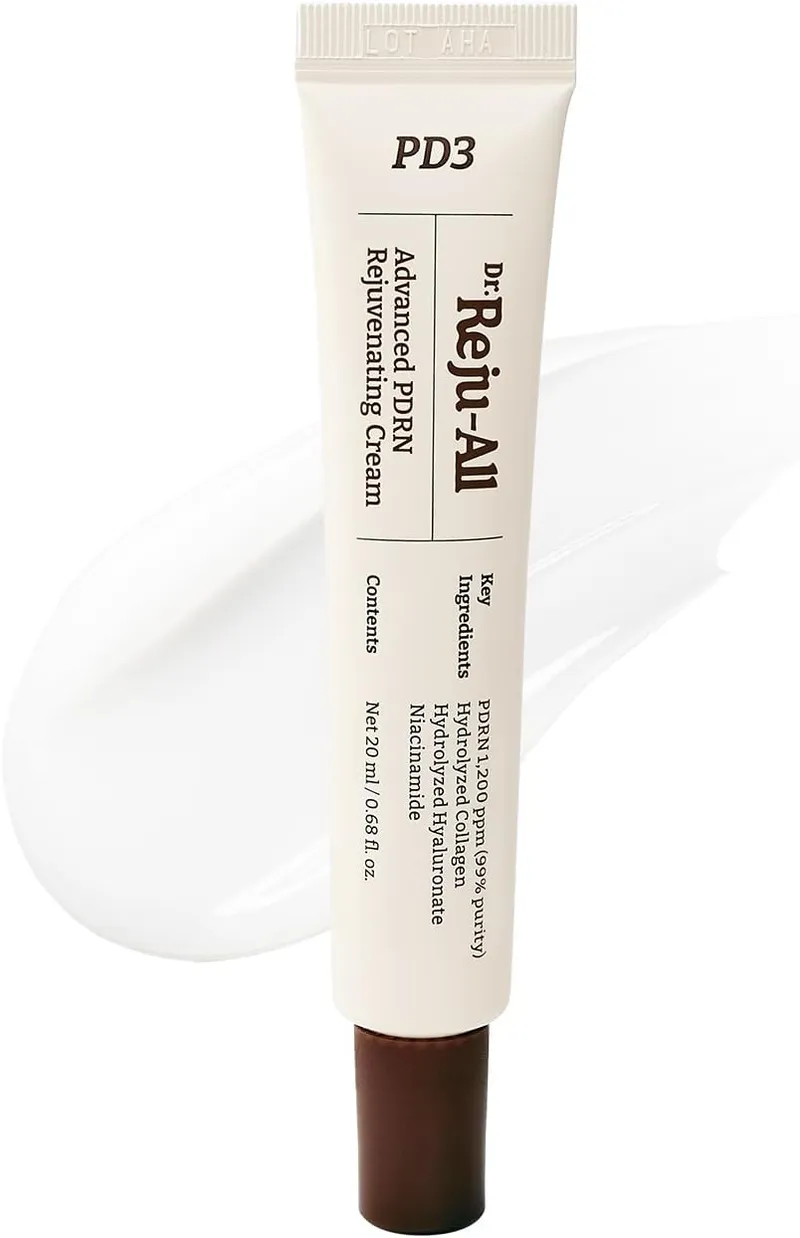
Dr. Reju-All Advanced PDRN Rejuvenating Cream
4.3 ★ · 1,259 reviews
99% pure salmon DNA in a lightweight gel formula. Best for layering under moisturizer as a hydration booster. Dermatologists recommend for post-treatment skin recovery, not scar fading.
BEST RATED
Anua PDRN Hyaluronic Acid 100 Moisturizing Cream
4.7 ★ · Highly rated
Creamy formula with HA and PDRN for sensitive skin. Excellent occlusive for the barrier repair routine. Won't fade scars but works as a nourishing moisturizer post-treatment.
BEST VALUE
VT COSMETICS PDRN Daily Mask 30 Sheets
4.3 ★ · 1,259 reviews
Convenient 30-sheet pack of PDRN masks. Use 2–3x weekly for hydration and skin smoothness. Delivers PDRN via occlusion, not penetration—ideal for barrier support.
BEST MASK FORMAT
medicube Jelly Gel Mask with Salmon DNA PDRN Pink Collagen
4.4 ★ · Highly rated
Premium jelly format with added collagen peptides. Luxe texture and extended contact time. Perfect for post-procedure skin recovery, not scar revision.
The real scar-fighting ingredients in topical skincare
If you want to improve acne scars at home, skip the PDRN serums. Instead, use these evidence-backed ingredients:
- Retinol/retinoids. Stimulate collagen remodeling and cell turnover. Clinical research shows 0.5–1% retinol improves shallow scars over 12 weeks. See our guide on retinol vs retinal vs tretinoin.
- Niacinamide. Reduces inflammation and supports collagen. Combines well with retinoids.
- Vitamin C. Boosts collagen synthesis. Works best at 10–15% L-ascorbic acid.
- AHAs (glycolic acid, lactic acid). Exfoliate and stimulate remodeling. Effective for shallow, textured scars.
Topical retinoids remain the gold standard for at-home scar improvement. Professional treatments (laser, microneedling, injectable PDRN) are far more effective than any serum.
Common questions
Does topical PDRN serum work for acne scars?
No. PDRN molecules are too large to penetrate the skin barrier. Topical PDRN works as a hydrating, anti-inflammatory surface treatment only. If you want PDRN to treat scars, it must be injected by a dermatologist.
How many injectable PDRN sessions do I need for acne scars?
Most patients see visible improvement after 3–4 sessions and optimal results after 6 sessions, spaced 2–4 weeks apart. Results continue to improve for 3–6 months post-treatment. Maintenance sessions every 6–12 months preserve results.
Can PDRN replace microneedling for acne scars?
No. PDRN works best combined with microneedling. Microneedling creates channels for PDRN delivery and triggers the skin’s own collagen synthesis. Neither alone is as effective as the combination.
Which is better for acne scars: PDRN or laser resurfacing?
Both work well; dermatologists often combine them. Laser resurfacing (fractional CO2 or erbium) has faster visible results (2–4 weeks) but requires 5–7 days of downtime. PDRN injections have minimal downtime but take longer to show results (6–8 weeks). A combo approach (laser + PDRN) produces the best scars in the shortest time.
Will PDRN treat active acne?
PDRN is anti-inflammatory but not antibacterial. It won’t stop breakouts. Use it only on healed scars, not active acne. If you have active inflammation, treat the acne first, then pursue scar revision.